Tuesday, 27 September 2016

Dubai to build tallest tower by 2020


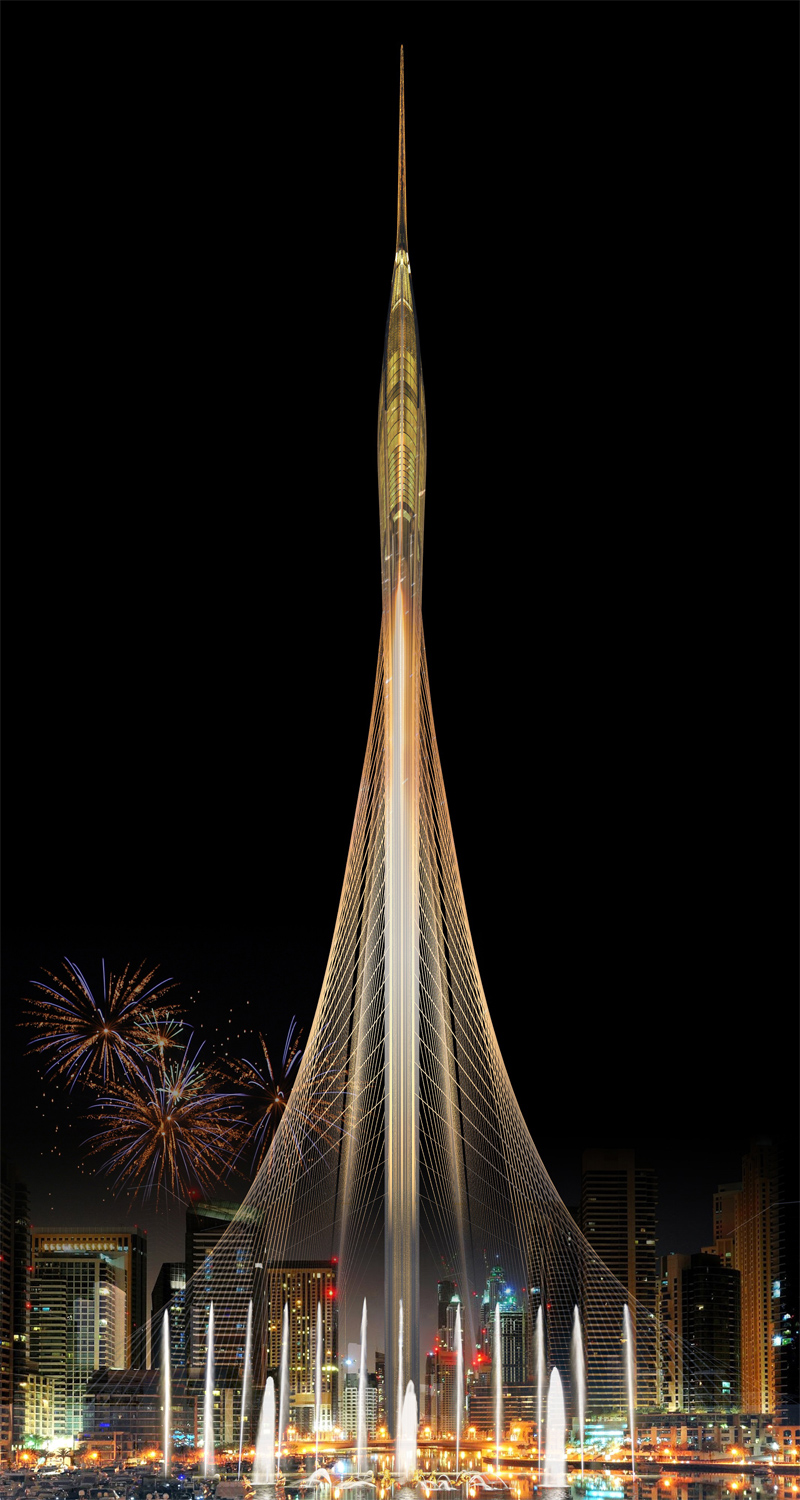
A futuristic new tower in Dubai will surpass the height of the current world record holder – the Burj Khalifa – and utilise the most advanced technology, engineering and materials available.

dubai tower 2020
Credit: Emaar Properties

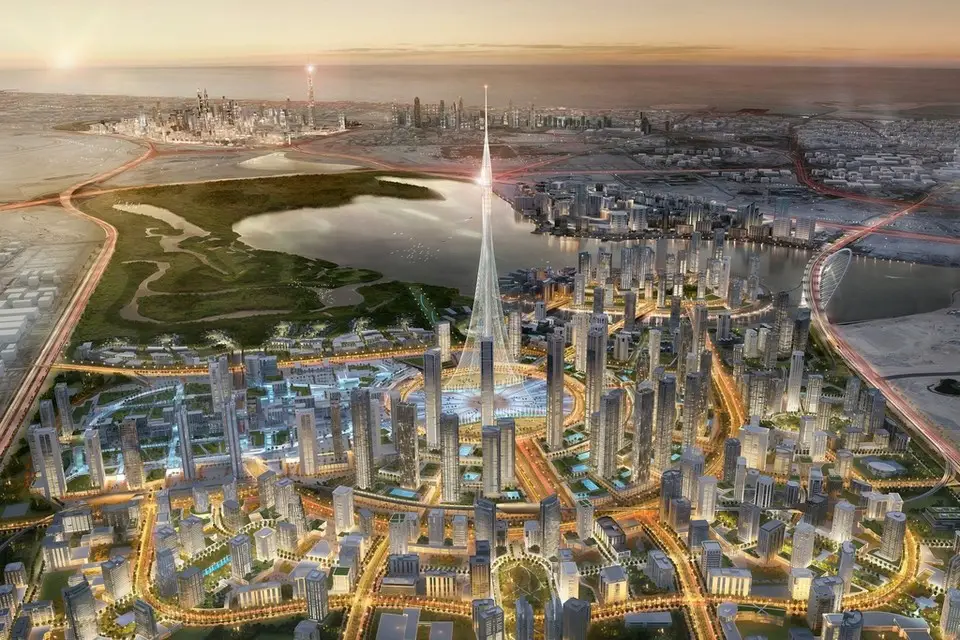
Emaar Properties has announced a "glittering new icon" that will redefine Dubai's skyline when completed in time for the 2020 World Expo. The tower is set to rise in the heart of Dubai Creek Harbour, to the east of the city's current tallest skyscraper and world record holder, the Burj Khalifa. The exact height of this proposed megaproject remains a secret and will be revealed at a later date, but its developers claim it will be the tallest in the city. It is, however, likely to be surpassed in height by the Jeddah Tower, currently under construction in Saudi Arabia and planned to reach 1,008 m (3,307 ft).
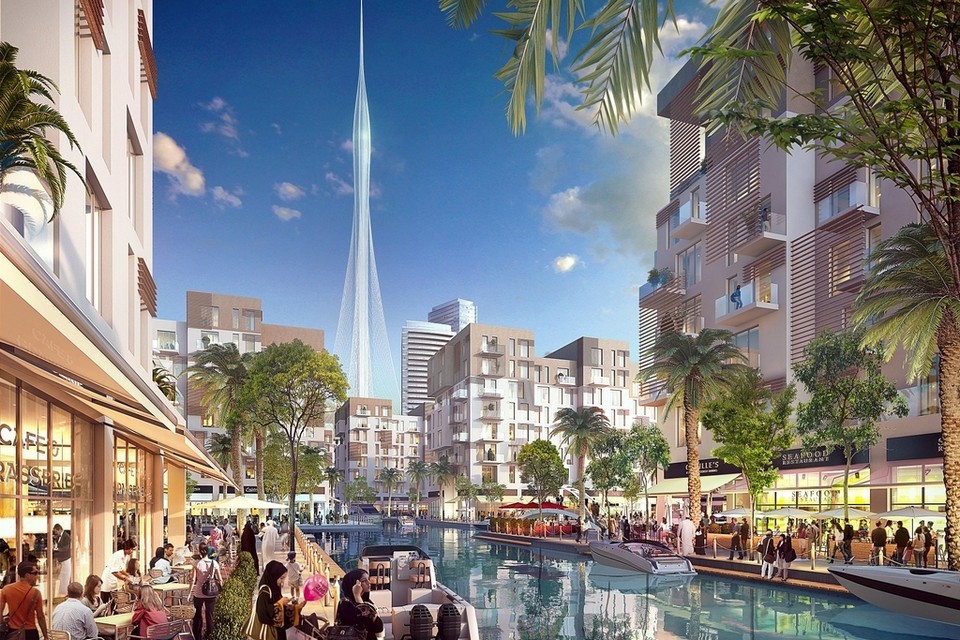
The unnamed building, currently known as simply "The Tower", will serve as the vibrant core of Dubai Creek Harbour – a 6 sq km world-class masterplannned development twice the size of Downtown Dubai and located 10 minutes from Dubai International Airport. The waterfront development is centred off Dubai Creek, the cradle of history and culture for this region, and in close proximity to Ras Al Khor National Wildlife Sanctuary, protected by UNESCO and home to nearly 70 species of water birds.
dubai tower 2020
Credit: Emaar Properties

Mohamed Alabbar, Chairman of Emaar Properties, said: "The Tower in Dubai Creek Harbour is our tribute to the positivity, energy and optimism that Dubai and the UAE celebrate, led by a leadership committed to all-round progress. A shining beacon of hope for the world, celebrating diversity and human achievements, this new iconic landmark further highlights the country's ambition and futuristic vision and enhances our nation's pride. It will be the destination for the world to visit, enjoy and celebrate life, as Dubai prepares to host the Expo 2020."
He added: "The design by Santiago Calatrava, chosen after a competitive pitch from the world's top architects, was a perfect fit to our requirement for a landmark that defined our urban core for Dubai Creek Harbour. It integrates not just design excellence but also strong environmental and smart-tech considerations. With The Tower, we are delivering a compelling destination that will add long-term economic value to Dubai and the UAE. It will also position Dubai Creek Harbour as one of the most desired residential, leisure and touristic attractions, providing visitors and residents with a modern, luxurious and sustainable environment in which to live, work, learn and entertain."
dubai tower 2020
Credit: Emaar Properties

"From the beginning, my team and I have tried to put the best of ourselves into this project, since it is very special and is a great honour to participate," said architect Santiago Calatrava Valls. "The collaboration with such a prestigious firm as Emaar Properties makes it even more exciting and demanding. The design has clear reference to the classic art from the past and the culture of the place while serving as a great technological achievement. In my whole career, I have perceived technology as a vehicle to beauty and to art. This project envisages an artistic achievement in itself, inspired by the idea of welcoming people, not only from Dubai and the UAE, but from the entire world. It is a symbol of an abiding belief in progress."
Calatrava's previous works include the World Trade Centre Transportation Hub in New York, Calgary Peace Bridge, Olympic Sports Complex in Athens and the Turning Torso Tower in Malmö that was recently awarded the Ten Year Award from the Council on Tall Buildings & Urban Habitat (CTBUH).
dubai tower 2020
Credit: Emaar Properties

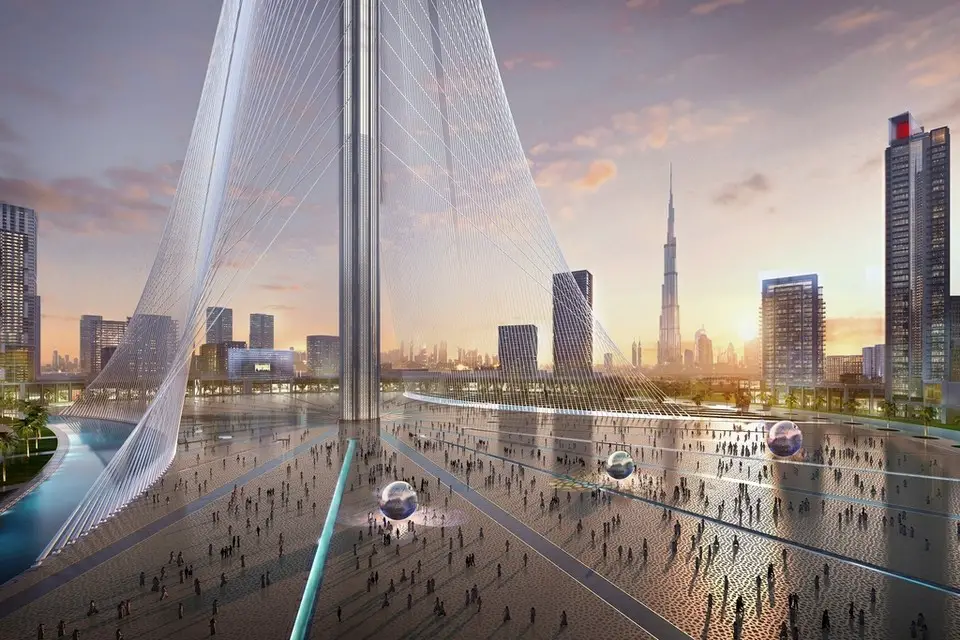
The Tower will feature green technology and sustainability measures that serve as industry benchmarks. An environment-friendly tram service will be integrated for effortless access, while on-foot visitors will have a multitude of access points onto the plaza. A number of green corridors are envisaged for pedestrian access and effortless connectivity with Dubai Creek Harbour.
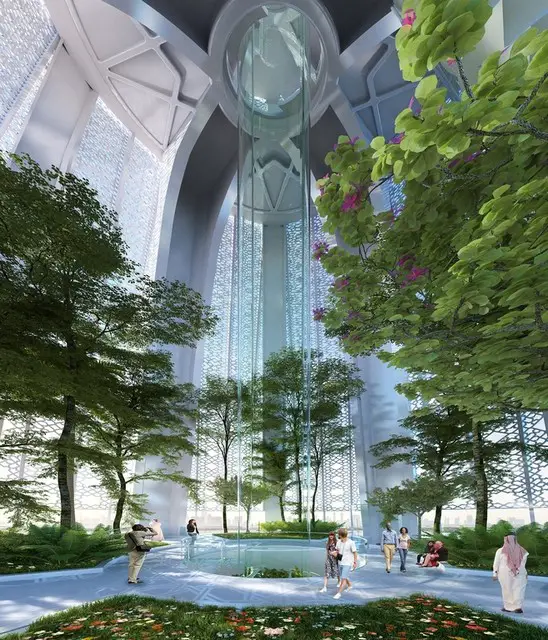
The crowning glory of the $1 billion tower will be a "Pinnacle Room" with 360 degree views of the city and beyond. Observation garden decks will recreate the splendour of the "Hanging Gardens of Babylon" – one of the Seven Wonders of the Ancient World. In addition, fully glazed rotating balconies will extend outward and move around the external facade.
dubai tower 2020
Credit: Emaar Properties

The Tower will serve mainly as an architectural structure, as opposed to a fully occupied working building – but will include about 20 upper floors used for a hotel, restaurants and function rooms, as well as the interior garden space and observation decks. The surrounding Dubai Creek Harbour project – being developed in a joint venture with Dubai Properties – will feature a 4.5km boardwalk, retail, nine lifestyle districts, 22 hotels, a yacht club, a marina and harbour.
In addition to hosting the World Expo, the UAE plans to launch the first Arabian mission to Mars the following year, which coincides with the 50th anniversary of the country's formation. To diversify its economy away from reliance on hydrocarbon exports, several billion dollars are being invested in the space sector and the creation of a regional hub for satellite construction. It is clear that the UAE has big ambitions for the future.

Scarf, as protection against paparazzi


Future technology Scarf, as protection against paparazzi
How to protect celebrities from intrusive paparazzi? Proposed a method of protection using scarf ISHU adding fibers with nano spherical crystals which reflect light from the photo flares leaving a luminous image cloth on a dark background. Useful property of accessory, which costs 290 pounds, already rated stars such as Cameron Diaz, Joe Jonas and Paris Hilton. Another, wishing to escape the flashes of photographers  have to wait, as the first batch of “magic” shawls already sold out..
The idea to create such clothes came in 2009, when one of the pictures
were damaged the reflectors, mounted on bicycle wheels. Now the designer willing to offer from fabric not only scarves but also hats, suits and cases for smartphones. But do not forget that without the flash, pictures obtained, as before.
Future technology Scarf, as protection against paparazzi

Designer Saif Siddiqui Future technology Scarf, as protection against paparazzi Future technology Scarf, as protection against paparazzi Future technology Scarf, as protection against paparazzi Future technology Scarf, as protection against paparazzi Future technology Scarf, as protection against paparazzi Future technology Scarf, as protection against paparazzi Future technology Scarf, as protection against paparazzi

The future of architecture Rising house 2025

The future of architecture Rising house, which themselves can be repaired

Future technology The future of architecture Rising house, which themselves can be repaired
Military research agency DARPA is investing in technologies,that will create materials,that will grow on command, and independently be to repaired, if damaged.
Now all building materials is quite difficult to manufacture, transport and assemble. Moreover, they deteriorate and disintegrate over time. The idea of DARPA is to create materials that can grow by acquiring the specified form, to repair themselves or to adapt and change themselves for the environment. The new program called “Creating a living material”
It sounds like something out of science fiction, but itself is repaired materials already produced. Recently, the first experiments on the three-dimensional printing of tissue were placed. Independently repaired homes can stand for centuries, without needing to be repaired by the people. Entire buildings can be built from scratch, using a minimum of material and nothing is spending on transportation.
Perhaps the most interesting goal of the program is to develop materials that are adapted to the environment. For example, the DARPA offers tiles, which can passively monitor the air flow, keeping the house cool in summer and warm – winter.
All this is still in the stage of the project, but DARPA knowing the reputation of turning science fiction into scientific fact, maybe it’s just in time and in a few years self-healing growing houses construction will deprive companies  of the lion’s share of the work.Future technology The future of architecture Rising house, which themselves can be repaired

The first passenger the train of the future on hydrogen

The first passenger the train of the future on hydrogen

future-technology-the-first-passenger-the-train-of-the-future-on-hydrogen
The electric vehicles have a number of advantages over hydrogen counterparts, but environmentally friendly fuel are actively interested on the railroad. Already in 2017, in Germany, will begin to run the world’s first passenger train on hydrogen, developed by engineers of the French company Alstom. Lokomotiv Coradia iLint accelerates to 140 km / h and can travel on a full tank of 600 to 800 kilometers, while highlighting the only water and steam.
Coradia iLint will ride on non-electrified sections of routes, on which usually ply diesel trains. For more efficient flow of hydrogen fuel a manufacturer established lithium-ion batteries, which store the “extra” energy. Her can be used at any time, for example, for charging mobile gadgets passengers. The train of the future does not produce harmful emissions into the atmosphere, and during movement the system produces much less noise than diesel. The illustrated model has 150 seats and is designed to transport 300 people.
Coradia iLint launch in North Germany in December 2017. Along with the purchase of environmentally friendly rail trains, operators will have to invest in the creation of a network of hydrogen filling stations.Future technology The first passenger the train of the future on hydrogen

Future technology The first passenger the train of the future on hydrogen Future technology The first passenger the train of the future on hydrogen Future technology The first passenger the train of the future on hydrogen

Monday, 1 July 2013

GIGS.2.GO: Portable Tear and Share USB Flash Drives

Have you ever found yourself in a situation where you desperately needed a flash drive but couldn’t find one to save your life? It’s times like these where something like the GIGS.2.GO would’ve been useful.
The question is, what’s GIGS.2.GO? It’s about the size of a credit card and it’s basically just four USB drives arranged into one neat little package.
GIGS.2.GO
The premise that Kurt Rampton and the BOLTgroup were working with when they designed GIGS.2.GO was to provide people with emergency thumb drives that they can just keep in their wallet.
Thanks to the “Tear and Share” technology, the card of drives will come in especially handy for people who work with large teams. Just tear off a drive, save your data, and pass it along to whoever needs it.
GIGS.2.GO1
GIGS.2.GO is designed to be produced from 100% post-consumer molded paper pulp, so they can be labeled easily with a pen or marker.

Solar Window Socket: Stick up and Plug in

If only harnessing the power of the Sun could be as simple as sticking an outlet with a solar panel onto your window. That’s the idea designers Kyuho Song and Boa Oh are pushing for with their Window Socket concept design.
Window Socket
It’s basically an outlet you fasten onto any clear window so that it charges up by absorbing the sun’s solar energy. When you want to power something up, simply stick the plug into the socket and that’s it.
window socket 2
The design description indicates that the solar energy will be transformed into electrical energy by a converter, although I can’t really see where they could have crammed that circuitry inside of the small puck-like device.
Window Socket1

18-Year Old Invents Supercapacitor that Charges Cellphone Batteries in 30 Seconds

How fitting is it that a high school student may have found the answer to longer lasting and faster charging mobile devices? The promising invention was made by Eesha Khare, an 18-year old student from Saratoga, California. It’s a supercapacitor that, according to Intel, “fits inside cell phone batteries, allowing them to fully charge within 20-30 seconds.”
supercapacitor by eesha khare
Supercapacitors have significantly higher durability and rate of charging (and discharging) compared to rechargeable batteries, but the downside to them is that they have a low energy density. That’s why they’re mainly used in devices that need short bursts of power. But in the video below, which was uploaded by Santa Barbara Arts TV on YouTube, you’ll hear Khare mention that her supercapacitors have “a special nanostructure, which allows for a lot [sic] greater energy per unit volume.”

 For her invention, Khare won $50,000 (USD) and was awarded one of the runners-up honors at the 2013 Intel International Science and Engineering Fair. The first place went to a 19-year old who developed an AI for a low-cost self-driving car.